
Your go-to resource for weed knowledge.
Tridax daisy
Tridax procumbens
Asteraceae
Medicinal
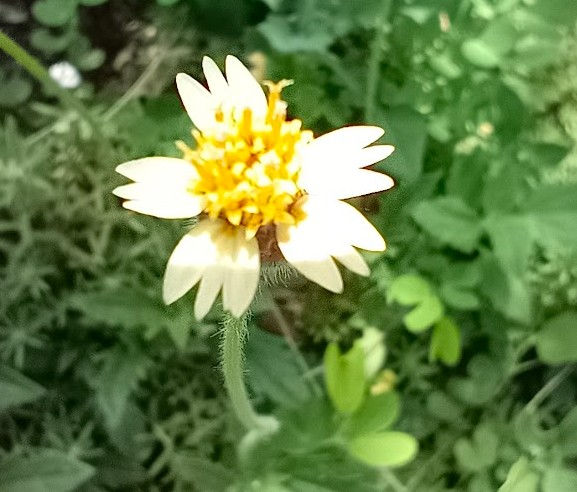


Tridax daisies is a native of the tropical Americas, but is now a common weed of many countries and multiple climatic zones (tropical, su-tropical & temperate). It is commonly found growing on roadsides, gardens, cultivation, natural areas and lawns. It is a spreading perennial herb, growing upto 75cm, but usually less. It is reported to have a firm taproot. The plant is characterised by lanceolate to ovate shaped leaves (3–4 cm long, 10–20 mm wide), which are bright green above and grey-green below, and toothed or shallowly lobed. Flowers are daisy like, with the centre yellow and petals yellow or white. Plants are capable of both self and cross pollination, with thrips, beetles, bees and butterflies listed as pollinators. A single plant can produce upto 2500 seeds. Seed germination is highest where seeds are exposed to some light. Allelopathic effects have been reported in rice.
In terms of floral visitations, one article (see links) provided a comprehensive list of insects forage for nectar and pollen on tridax daisies. Some of these included Apis dorsata (Giant honey bee), Tetragonula iridipennis (Indian stingless bee), Helophilus sp. (Hoverfly), Pachliopta aristolochiae, Graphium agamemnon, Catopsilia pomona (Common emigrant or lemon emigrant butterfly), Ariadnae merione (Common castor butterfly), Precis iphita (Chocolate pansy butterfly), Zuzula hylax (Tiny grass blue butterfly) and Borbo cinnara (Rice swift butterfly). In an article (see links) a range of butterflies have been observed visiting tridax daisies. Pests and diseases reported with tridax daisies include: Tridax mosaic virus Root-knot nematodes Phalanta phalantha (Leopard or spotted rustic butterfly) known defoliate poplar trees. Red spider mite (Tetranychus telarius Tetranychus urticae). Macrophomina phaseolina (causes damping off) Sunflower yellow blotch umbravirus Aphis citricola (aphid) - a vector of citrus cistreza closterovirus. Cercospora tridacis-procumbentis (Cercospora spot) Puccinia cnici-oleracei (rust) Puccinia melampodii (rust)