
Your go-to resource for weed knowledge.
Wild radish
Raphanus raphanistrum
Brassicaceae
Medicinal and edible uses are reported.

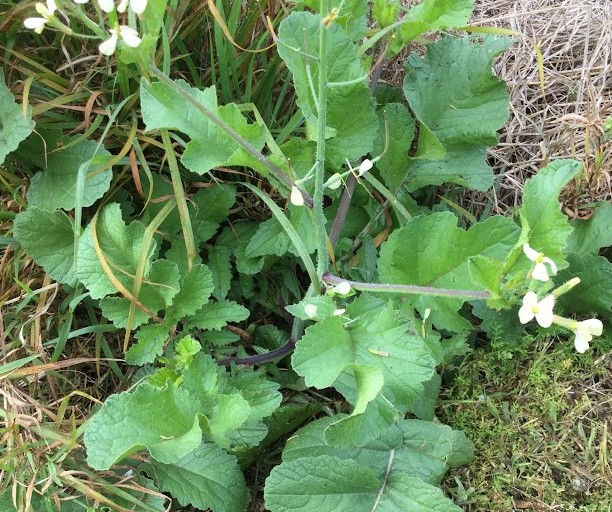

Wild radish is annual plant, with germination and growth occurring in the cooler months of the year. In the early stages of growth, basal leaves form a characteristic rosette. The plant is also known to form a taproot. It has an upright growth habit (40 - 100 cm tall) and is generally short lived (annual or biennial). Flowers are yellow to white. Siliqua (fruit) is 1–5 cm long, 3–5 mm wide, markedly constricted between seeds and breaking into 1-seeded portions. Wild radish produces prolific seed quantities (800 per plant) with high longevity and dormancy. Wild radish is a weed of disturbed sites, waste areas, roadsides, crops, pastures, orchards, waterways, floodplains and open woodlands. It has a wide distribution from temperate regions, sub-tropical, semi-arid and sometimes tropical regions. Wild radish tolerates a range of soil types, but has been shown to have a preference for acidic sandy soils. Herbicide resistance has been reported for chlorsulfuron in South Africa and multiple resistance to several herbicide groups in other regions.
Wild radish hosts a range of vegetable crop pests and diseases, some of which include thrips, flea beetle, cabbage seedpod weevil, cabbage root fly, several moth species, Fusarium oxysporum f.sp melonis, club root, blackleg, turnip yellow mosaic virus, beet western yellows virus, turnip mosaic virus, cauliflower mosaic virus and cucumber mosaic virus It also hosts a number of bacteria that can act as disease reservoirs in vegetable crops Wild radish is known to be a source of pollen and nectar for honey bees. This weed is highly attractive to honey bees and the native Australian stingless bee (Tetragonula). A range of other bees are known to visit flowers (Discover Life). In addition to honey bees and stingless bees, butterflies and syrphyd flies are also known to visit flowers